Product Description
Premium ZnSe Meniscus Focusing Lens (1 inch) for CO2 Laser Systems – High-Precision Optic
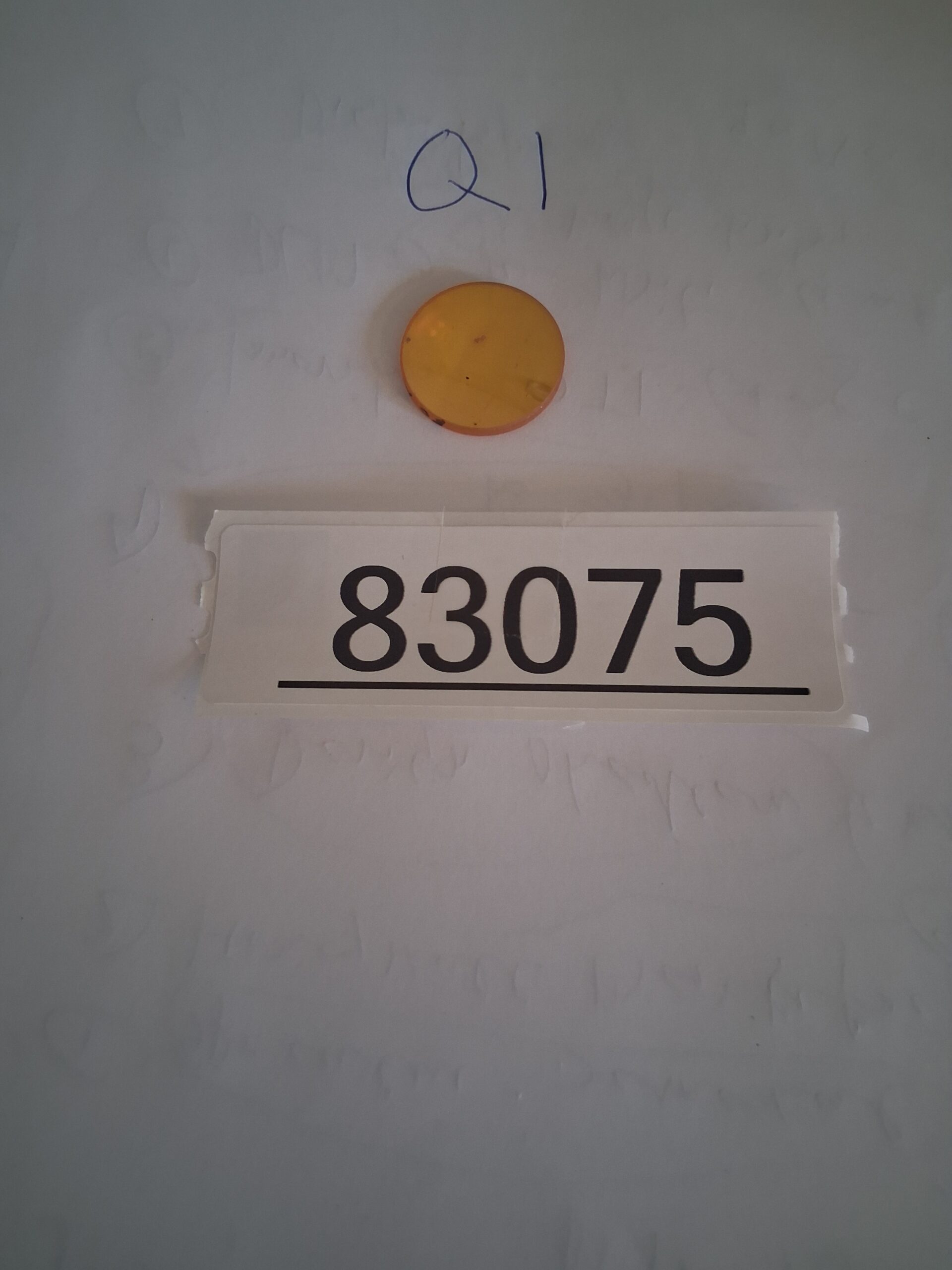
Elevate your laser engraving and cutting projects with this top-tier Zinc Selenide (ZnSe) positive meniscus focusing lens, sourced from a leading manufacturer Coherent/II‑VI Incorporated. This isn’t your average budget optic—it’s a precision-engineered component designed for demanding industrial and hobbyist applications, offering superior beam convergence and minimal aberrations.
The meniscus design (convex on one side with a steeper curve, concave on the other) provides distinct advantages over basic plano-convex lenses . By reducing spherical aberration, it delivers a tighter, more energetic focus spot, resulting in cleaner cuts, finer engraving details, and higher energy density at the workpiece—especially beneficial for applications using larger beam sizes .
With its anti-reflection (AR) coatings on both sides, it ensures maximum efficiency and longevity in high-performance CO2 laser setups. Ideal for professionals in manufacturing, prototyping, or creative fabrication who demand reliability and sharp results.
Key Specifications
| Specification | Details |
|---|---|
| Manufacturer | Coherent / II‑VI Incorporated |
| Material | High-purity Chemical Vapor Deposition (CVD) ZnSe |
| Shape | Positive meniscus (convex-concave) |
| Diameter | 1 inch (25.4 mm) |
| Edge Thickness | Approximately 2.2 mm |
| Focal Length | 2.5 inches (63.5 mm) |
| Wavelength | Optimized for 10.6 μm (CO2 lasers) |
| Coatings | Dual-sided AR/AR coatings for 10.6 μm |
| Transmission | >99.5% with AR coatings |
| Reflectivity | <0.5% per surface |
| Surface Quality | Cosmetic inclusions only – does not affect optical performance |
| Orientation Feature | User-marked arrow (inverted V) pointing to concave side |
Meniscus Design Advantage
The meniscus lens geometry is specifically engineered to minimize spherical aberration . When working with larger beam sizes, meniscus lenses offer reduced spherical aberration and higher energy density over plano-convex alternatives . This results in:
-
Tighter focus spot for higher resolution engraving
-
Improved cut quality with cleaner edges
-
Better energy concentration at the workpiece
-
Reduced beam divergence for more precise control
For CO2 laser processing applications including cutting, engraving, welding, and marking, this advanced optical design is a significant upgrade over standard lenses .
Material Excellence – CVD ZnSe
Zinc Selenide (ZnSe) is the preferred material for CO2 laser optics due to its exceptional properties :
-
Lowest Absorption: ZnSe has the lowest absorption coefficient among common CO2 laser transmitting materials (<0.0005 cm⁻¹ at 10.6 μm), making it particularly suitable for high-power applications
-
Broad Transmission Range: 0.6 μm to 21 μm, covering the entire IR spectrum
-
Visible Transmission: The signature yellow-orange tint allows for alignment with visible lasers (e.g., HeNe at 633 nm)
-
High Thermal Stability: Excellent resistance to thermal shock and stability in virtually all environments
-
CVD-Grown Purity: Chemically vapor deposited material features extremely low bulk losses due to absorption and scatter
Important Handling Note: ZnSe is relatively soft with low scratch resistance . Extra caution is required during cleaning, handling, and mounting . Always wear gloves when handling these lenses and thoroughly wash hands afterward .
AR Coating Performance
Due to ZnSe’s relatively high refractive index (~2.4), anti-reflection coating is critical to obtain high transmission . This lens features:
-
Dual-sided AR coatings specifically engineered for 10.6 μm
-
High damage threshold for reliable high-power operation
-
Durable and wiping-resistant coating
-
Excellent transmittance: T > 99.5% at 10.6 μm
-
Reflectivity reduced to <0.5% per surface, minimizing energy loss and heat buildup
Without AR coating, a ZnSe optic would have approximately 29.1% reflection loss at two surfaces . The dual-sided AR coating virtually eliminates these losses, maximizing delivered power to the workpiece.
Orientation Feature
The lens includes a user-marked arrow (inverted V) pointing to the concave side. For optimal performance, the convex side should face the incoming beam (typically away from the workpiece) . This orientation minimizes spherical aberration and prevents thermal lensing effects.
Condition Notes
LIGHTLY USED – EXCELLENT OPTICAL CLARITY
TWO MINOR SURFACE INCLUSIONS (small black spots, ~0.2-0.5 mm)
COSMETIC ONLY – DOES NOT IMPACT FUNCTIONALITY
IN LOW-TO-MEDIUM POWER APPLICATIONS (30-200W)
NO CRACKS, CHIPS, OR CLOUDING
OVERALL EXCELLENT OPTICAL QUALITY
These minor cosmetic inclusions are insignificant for practical use and do not affect beam quality, transmission, or focusing performance. The lens remains fully functional for precision applications.
| Weight | 1 lbs |
|---|---|
| Dimensions | 6 × 3 × 3 in |
Related products


Laser Accessories