Product Description
ZnSe Plano-Plano Optic Window – 1″ Diameter, 5mm Thick, AR Coated
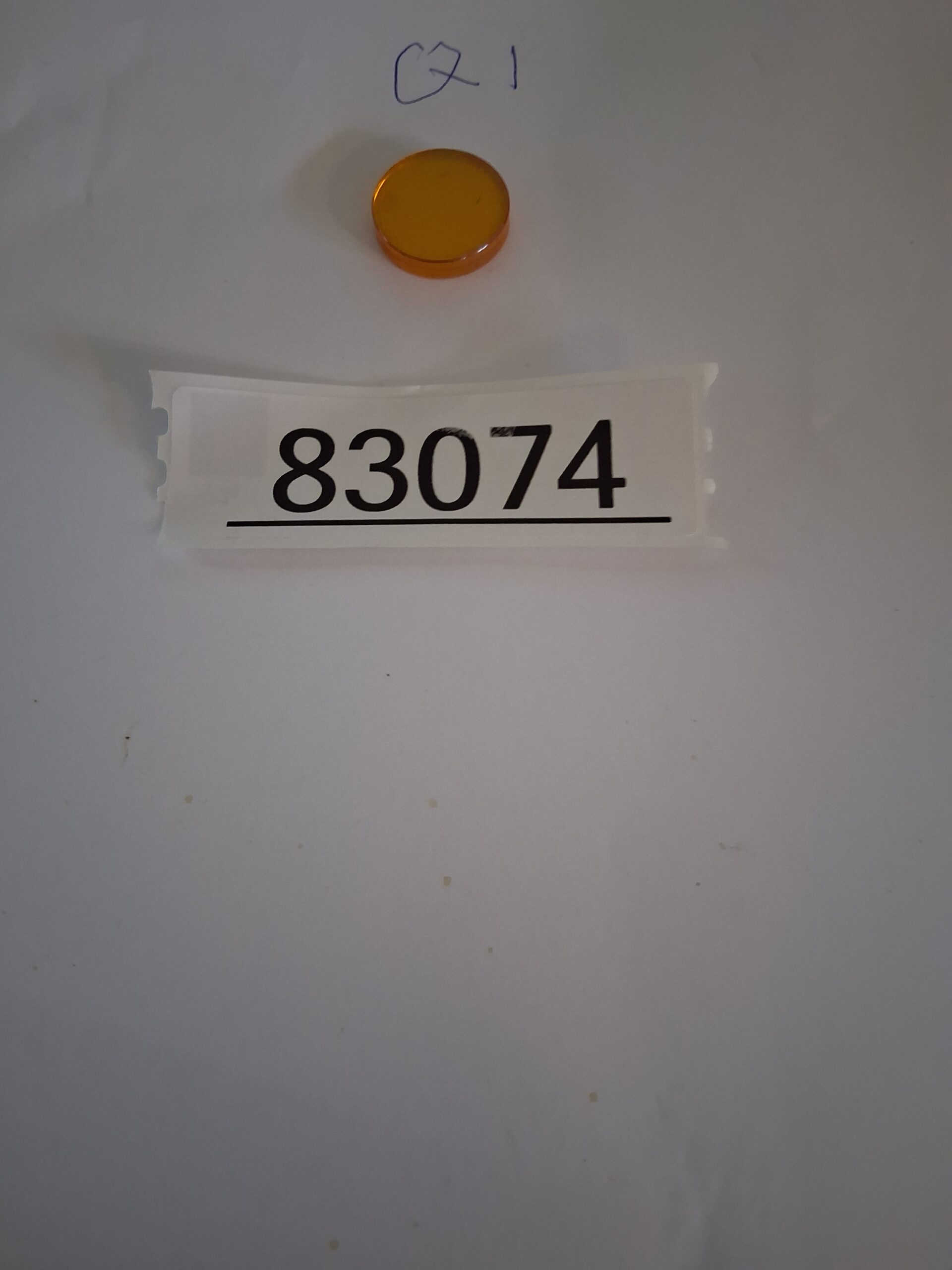
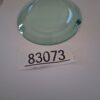
This high-quality Zinc Selenide (ZnSe) plano-plano optic window measures 1 inch (25.4mm) in diameter and 5mm in thickness, sourced from a reputable US manufacturer II‑VI Incorporated (now part of Coherent Inc.) . It features an anti-reflective (AR) coating on both sides, optimized for minimal reflection and enhanced transmission in the infrared spectrum.
Zinc selenide is one of the materials of choice for CO₂ laser optics operating at 10.6 microns . Its broad transmission band, coupled with its minimal absorption, makes it an ideal substrate for optical components used in infrared applications such as thermal imaging and high-powered laser systems . An additional advantage of using ZnSe is its transmission within the visible region, specifically 632.8nm, allowing for HeNe laser pairing for alignment purposes .
The optic appears in good surplus/used condition with minor cosmetic marks from handling or storage, but these are insignificant and do not impact its optical performance or usability—ideal for precision applications.
Key Specifications
| Specification | Details |
|---|---|
| Manufacturer | II‑VI Incorporated (now Coherent Inc.) |
| Material | Laser-grade Zinc Selenide (ZnSe), polycrystalline, CVD-grown |
| Shape | Plano-Plano (flat on both sides) |
| Diameter | 1 inch (25.4 mm) |
| Thickness | 5 mm |
| Coating | Advanced Anti-Reflective (AR) on both sides |
| Coating Type | Broadband AR (likely optimized for 7.0-12.0 µm) |
| Coating Performance | Ravg < 1.0% within specified range |
| Coating Appearance | Characteristic greenish reflection in visible light – indicates high-performance thin-film layers |
| Transmission Range (ZnSe) | 0.6 µm to 21 µm |
| Transmission (AR-coated) | >98% within coating range |
| Refractive Index | 2.4028 at 10.6 µm |
| Absorption Coefficient | 0.0005 cm⁻¹ at 10.6 µm |
| Reflection Loss (uncoated) | 29.1% at 10.6 µm (2 surfaces) |
| Density | 5.27 g/cc |
| Hardness | Knoop 120 with 500g indenter – relatively soft; handle with care |
| Melting Point | 1525°C (dissociates above 700°C) |
| Condition | Good surplus/used – minor cosmetic marks from handling or storage, does not affect optical performance |
Material & Coating Advantages
High-Purity Zinc Selenide (ZnSe) :
-
Broadband IR Transmission: 0.6 µm to 21 µm, covering the visible red through far-IR, including the critical 8-14 µm LWIR atmospheric window
-
Low Absorption: Exceptionally low absorption at 10.6 µm (<0.0005 cm⁻¹) makes it ideal for high-power CO₂ laser systems, minimizing thermal lensing and power loss
-
CO₂ Laser Optimization: ZnSe is the material of choice for CO₂ laser optics operating at 10.6 microns
-
Visible Transmission: ZnSe transmits in the visible region, specifically 632.8nm, allowing for HeNe laser pairing for alignment purposes
-
Non-Hygroscopic: Unlike some IR materials, ZnSe is stable in normal atmosphere up to 250°C
Anti-Reflective (AR) Coating :
-
Applied to both sides for optimal performance
-
Reduces surface reflections and increases transmission in the specified range
-
The characteristic greenish reflection in visible light indicates high-performance thin-film layers
-
Based on Thorlabs’ comparable products, similar coatings achieve Ravg < 1.0% within the 7.0-12.0 µm range
-
The -E3 coating from Thorlabs for 7-12µm has demonstrated CW damage thresholds of 1000 W/cm at 10.6 µm
Thickness Advantage – 5mm Profile :
The substantial 5mm thickness provides:
-
Enhanced mechanical strength and rigidity
-
Improved thermal stability for high-energy environments
-
Better heat dissipation in high-power applications
-
Reduced risk of breakage during handling and mounting
-
Performance beyond thinner (2-3mm) commercial variants
Surface Quality Note – Cosmetic Marks Only
The optic shows minor cosmetic marks from handling or storage. These are:
-
Surface-level only – do not penetrate into the substrate
-
Outside the critical optical path – does not affect transmitted beam
-
Cosmetic only – no impact on optical performance or usability
-
Typical of surplus optics – does not compromise IR transmission
The optical surfaces remain fully functional for precision IR applications.
Applications
CO₂ Laser Systems (10.6 μm) :
-
Protective windows for industrial cutters, engravers, and markers
-
Beam delivery components in high-power CO₂ laser systems
-
Debris shields for scan lenses (also known as “fragmentation windows”)
-
The AR coating reduces energy loss and prevents back-reflections that could damage laser sources
Thermal Imaging and FLIR :
-
Forward-looking infrared (FLIR) cameras and thermal sensors for night vision, surveillance, or medical thermography
-
ZnSe’s broad transmission range encompasses the MWIR and LWIR thermal bands
-
Applications in thermography, night vision devices, and target tracking
Spectroscopy and Analytical Instruments :
-
FTIR (Fourier-Transform Infrared) spectrometers and gas analyzers
-
High optical clarity for accurate measurements
-
ATR prisms for spectroscopy applications
Aerospace and Defense :
-
Missile guidance systems and IR countermeasures
-
Environmental monitoring equipment
-
Durable material for demanding environments
Research and Development :
-
Custom setups in optics labs for beam steering, focusing
-
Substrates in experimental IR photonics
-
IR spectroscopy, night vision devices, and target tracking systems
Condition
GOOD SURPLUS/USED CONDITION
MINOR COSMETIC MARKS FROM HANDLING OR STORAGE – DOES NOT AFFECT OPTICAL PERFORMANCE
OPTICAL SURFACES: CLEAN, COATINGS INTACT
AR COATING: Characteristic greenish reflection visible
READY FOR IMMEDIATE INTEGRATION
⚠ CRITICAL HANDLING NOTE: Zinc selenide has a Knoop hardness of 120, making it relatively soft and easily scratched . Always wear gloves when handling . ZnSe is a hazardous material – for safety, please follow all proper precautions . Thorlabs recommends disposing of ZnSe components properly and offers a return service for disposal . Avoid mechanical shock, store in a dry environment, and clean only with approved optical solvents and lint-free cloths if absolutely necessary. Do not exceed 250°C in normal atmosphere .
| Weight | 1 lbs |
|---|---|
| Dimensions | 6 × 3 × 3 in |
Related products


Counters and Timers