Product Description
Surplus 5-Inch Plano-Convex Soda-Lime Glass Lens – Great for DIY Optics and Magnification Projects
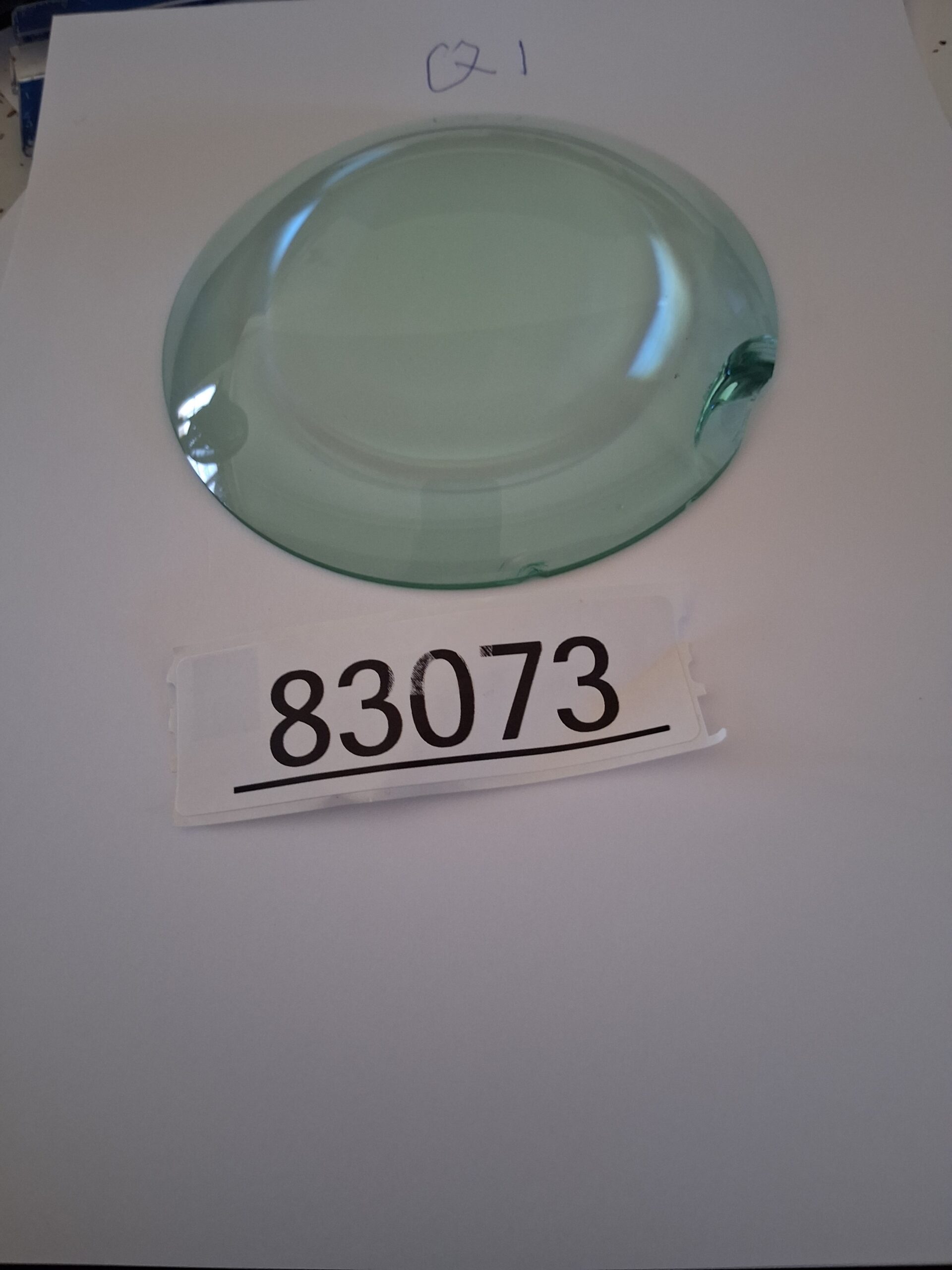
This sturdy plano-convex lens measures approximately 5 inches (127 mm) in diameter, with an edge thickness of about 3 mm and a center thickness of roughly 1.25 inches (31.75 mm) . Made from standard soda-lime glass with a subtle greenish tint from natural impurities, it’s uncoated for straightforward light transmission and has an estimated back focal length of around 6.25 inches (158.75 mm) . Ideal for basic focusing, imaging, or experimental setups.
Important note: There’s a small chip on the edge, about 10 mm deep along the diameter and 1.15 inches (29 mm) along the circumference. This is purely cosmetic, confined to the rim, and will not affect the main optical performance. The rest of the lens is in solid condition with clean, polished surfaces and no significant scratches.
Key Specifications
| Specification | Details |
|---|---|
| Type | Plano-convex (positive) spherical lens |
| Diameter | 5 inches (127 mm) |
| Edge Thickness | ~3 mm |
| Center Thickness | ~1.25 inches (31.75 mm) |
| Estimated Back Focal Length (BFL) | ~6.25 inches (158.75 mm) |
| Material | Standard soda-lime glass (greenish tint from natural iron impurities) |
| Refractive Index (estimated) | ~1.5 (typical for soda-lime glass) |
| Radius of Curvature (estimated) | ~84.5 mm |
| F-number | ~f/1.33 (fast aperture for efficient light collection) |
| Magnification | ~1.5-2x in handheld use |
| Coating | Uncoated |
| Condition | Solid, clean polished surfaces; small cosmetic edge chip noted |
Material Note – Soda-Lime Glass
Soda-lime glass is the most common form of glass, used for windows, bottles, and basic optical applications. Its key characteristics:
-
Low Cost: Economical material, making large-diameter lenses accessible for DIY projects
-
Greenish Tint: Natural iron impurities create a subtle green color, especially visible at the edges
-
Good Transmission: Transmits well in the visible spectrum (400-700 nm)
-
Adequate Durability: Suitable for non-critical indoor applications
-
Limitations: Higher absorption and lower homogeneity than optical crown glasses (like BK7); not suitable for precision laser or demanding imaging applications
This is a utility-grade optic – perfect for learning, experimenting, and non-critical projects where optical perfection is not required.
Optical Performance Notes
-
Fast f/1.33 Aperture: Excellent light-gathering capability – ideal for condensers and bright imaging
-
Spherical Aberration: As with all spherical singlets, expect some blurring at the edges of the image. Performance is best near the center .
-
Uncoated Surfaces: ~4-5% reflection loss per surface (approx. 8-10% total) – adequate for basic applications
-
Chromatism: As a singlet, it will show color fringing (chromatic aberration) when used for white light imaging – typical for simple lenses
This lens excels in applications where light gathering and large diameter are more important than diffraction-limited performance.
Condition Note – Cosmetic Edge Chip
The lens has a small chip on the edge, measuring approximately:
-
10 mm deep (radially inward from the edge)
-
29 mm (1.15″) long along the circumference
This chip is confined to the outer rim, outside the clear aperture. It will not affect light transmission or image formation through the central portion of the lens. It is purely cosmetic and does not impact optical performance.
The rest of the lens is in excellent condition with:
-
Clean, polished optical surfaces
-
No significant scratches or defects in the central area
-
No cracks or structural damage
Recommended Uses & Applications
Magnification Tools:
-
Place flat side down for enlarging fine print, maps, or specimen details
-
Handheld 1.5-2x magnifier for hobbyists and inspectors
Lighting and Focusing:
-
As a condenser in lamps, projectors, or stage lights
-
Solar experiments (handle sunlight carefully – can ignite materials)
-
Focus light for solar ovens or solar heating demonstrations
Educational Demonstrations:
-
Teach refraction, focal points, and lens basics in schools, colleges, or home science labs
-
Demonstrate spherical aberration and its effects
-
Show the greenish tint of soda-lime glass
Custom Builds:
-
Integrate into simple refractor telescopes (will show color fringing)
-
Projector or overhead projector modifications
-
Camera obscura or pinhole photography experiments
-
Prototype optical systems where low cost is critical
Creative Projects:
-
Experiment with light effects in art, photography, or installations
-
Macro photography with creative blur effects
-
Burnishing or light focusing for craft projects
| Weight | 3 lbs |
|---|---|
| Dimensions | 8 × 6 × 4 in |
Related products


Optical Equipment


Optical Accessories

Optical Accessories