Product Description
Premium Trio of 2″ Diameter λ/10 Fused Silica Dual-Surface Optical Flats with Anti-Reflection Coating – Excellent Condition
A rare, matched collection of three precision 2″ (50.8mm) fused silica optical flats, each polished to λ/10 surface flatness or better and featuring broadband anti-reflection (AR) coatings on both reference surfaces. Sourced from professional laboratory surplus, these dual-surface reference flats represent the gold standard for interferometric flatness testing—essential metrology tools for any serious optics, manufacturing, or research facility.
🔍 Key Specifications (All Three Flats):
📐 Dimensions & Material:
-
Diameter: 2.0″ (50.8 mm) – standard mounting compatibility
-
Thickness: 9 mm – exceptional rigidity, minimizes gravitational sag
-
Material: Fused silica – UV-grade, near-zero thermal expansion (0.55 × 10⁻⁶/°C)
-
Transmission Range: Deep UV to near-IR (200 nm – 2.5 µm)
💎 Surface & Coating:
-
Flatness: λ/10 or better at 633 nm (marked/verified)
-
Surfaces: Dual-side high-precision polish – both faces reference-quality
-
Reference Surface Indication: Pointer arrow engraved on edge – unambiguous orientation
-
Coating: Broadband AR (visible spectrum optimized) – <0.5% reflectivity per surface
-
Edge Finish: Safely ground/frosted – no sharp edges, comfortable handling
✅ Overall Condition:
-
All three flats: Excellent surplus condition
-
Optical Surfaces: No scratches, chips, or coating defects on primary reference surfaces
-
Usage History: Very lightly used if at all – professional laboratory environment
-
Includes: Flats only – no storage cases or certification documents
📦 Individual Flat Details:
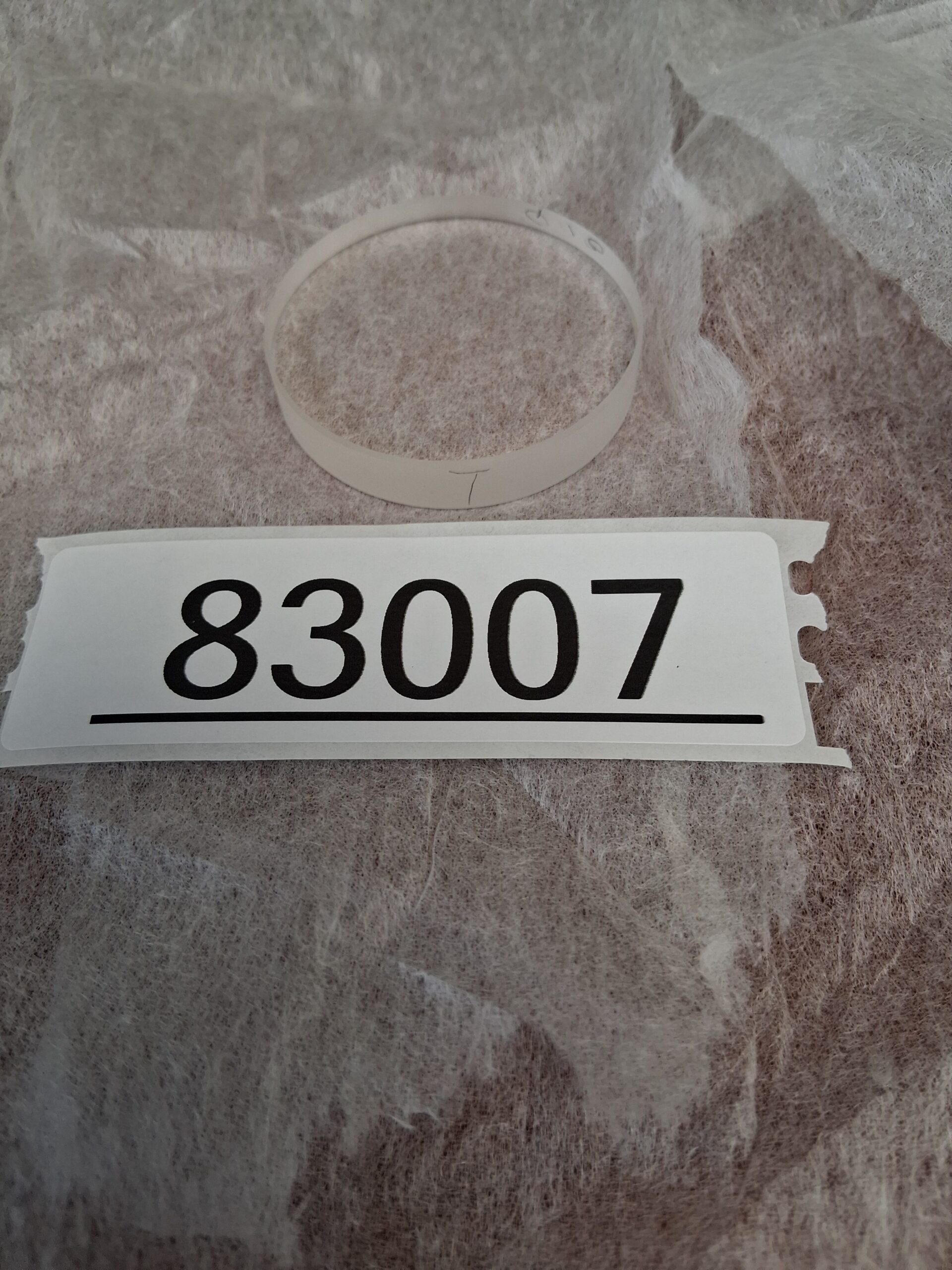
1. Modern Beveled λ/10 Flat
-
Markings: “Q 10” engraved; reference surface arrow
-
Edge Finish: 45° chamfers on both edges – modern precision fabrication
-
Condition: Cleanest of the three – looks almost new
-
Cosmetic: Excellent – no visible wear, haze, or handling marks
-
Best For: Primary reference standard, ISO-compliant metrology, demonstration-quality appearance
2. Classic Marked λ/10 Flat
-
Markings: Engraved “λ/10” + pointer arrow indicating reference surface
-
Edge Finish: Sharp ground edges – traditional precision fabrication
-
Condition: Very clean surfaces – identical material and performance to modern flat
-
Cosmetic: Older-style edge finish, optically pristine
-
Best For: Traditional metrology lab, unambiguous reference identification, heritage equipment
3. Classic Unmarked λ/10-Quality Flat
-
Markings: No surface engraving – λ/10 quality verified by provenance and inspection
-
Edge Finish: Sharp ground edges (traditional fabrication)
-
Condition: One surface has very light storage haze; opposite surface is pristine
-
Note: Haze is cosmetic only – does not affect flatness, fringe contrast, or metrology function
-
Best For: Secondary reference, educational use, non-critical testing, exceptional value
💎 Why These Flats Are Exceptional:
🔬 Fused Silica – The Premium Choice for Reference Optics:
Unlike BK7 or standard optical glass, fused silica offers:
-
Near-zero thermal expansion – 5× better than BK7, no focus drift with temperature
-
Deep UV transmission – usable down to 200 nm for excimer and UV interferometry
-
Superior homogeneity – no striae, bubbles, or refractive index variations
-
Laser damage resistance – suitable for high-power metrology applications
-
Chemical durability – resists humidity and environmental degradation
💎 λ/10 Flatness – Genuine Laboratory Grade:
λ/10 at 633 nm (≈63 nm peak-to-valley) is the de facto standard for precision metrology:
-
Quantifiable accuracy – measure test surfaces to 0.1 fringe resolution
-
ISO 10110 compliant – suitable for certified QC applications
-
Interferometer-ready – immediate use in Fizeau, Twyman-Green, and Michelson setups
-
Traceable capability – can be certified against NIST-traceable standards
🎯 AR-Coated Both Sides – Rare & Valuable:
Most surplus optical flats are uncoated (4% reflection per surface). These flats feature:
-
Broadband AR coating on both reference surfaces – <0.5% reflectivity
-
Eliminates ghost fringes from back-surface reflections
-
Maximizes fringe contrast – cleaner, higher-SNR interferograms
-
Laser-compatible – no parasitic etalon effects in coherent illumination
-
Transmission-optimized – ideal for Fizeau interferometry
🔄 Dual-Surface Usability:
Both sides are polished to λ/10 reference quality:
-
Two working surfaces per flat – extended service life, redundancy
-
Self-verifying – verify one surface against the other
-
Cost efficiency – essentially two reference flats in one optic
-
Wear distribution – rotate usage between surfaces
🛠️ Applications & Uses:
🔬 Interferometric Flatness Testing:
-
Verify surface figure of lenses, mirrors, prisms, and optical windows
-
Fizeau interferometry – transmission flat reference
-
Newton’s ring testing – contact or near-contact fringe analysis
-
Optical contacting – temporary bonding for assembly and alignment
📏 Precision Metrology & Quality Control:
-
Gauge block calibration – wringing surface verification
-
Mechanical seal flatness – semiconductor, vacuum, hydraulic, and aerospace systems
-
Optical manufacturing QC – incoming inspection, process control, final certification
-
ISO/AS9100 compliance – documented traceable reference capability
🔭 Research & Development:
-
Laser cavity alignment – verify mirror and window flatness
-
High-power laser optics – certify debris shields, harmonic separators, and dichroics
-
Space/defense optics – qualification testing under thermal vacuum
-
University metrology labs – graduate student training in interferometry
🧪 Educational & Training:
-
Demonstrate interference phenomena – coherent vs. incoherent sources
-
Teach fringe interpretation – P-V, RMS, power, irregularity
-
Optical fabrication courses – verify student-polished test plates
-
Physics demonstrations – wavelength measurement, optical path difference
🏭 Industrial & Semiconductor:
-
Wafer flatness verification – semiconductor substrate inspection
-
Precision machining QC – surface plates, machine tables, sealing surfaces
-
Optical assembly – verify adhesive bond lines, mounting-induced distortion
| Weight | 3 lbs |
|---|---|
| Dimensions | 5 × 5 × 5 in |
Related products

Optical Components

Optical Components
mixture of Hoya and Schott shortpass and bandpass filters- case of 20 mixed filters

Filters Iris Diaphragms and Slits
Thorlabs NE10A-B AR-Coated Absorptive Neutral Density Filter



Optical Components