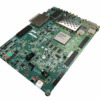
Overview
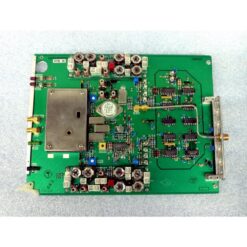
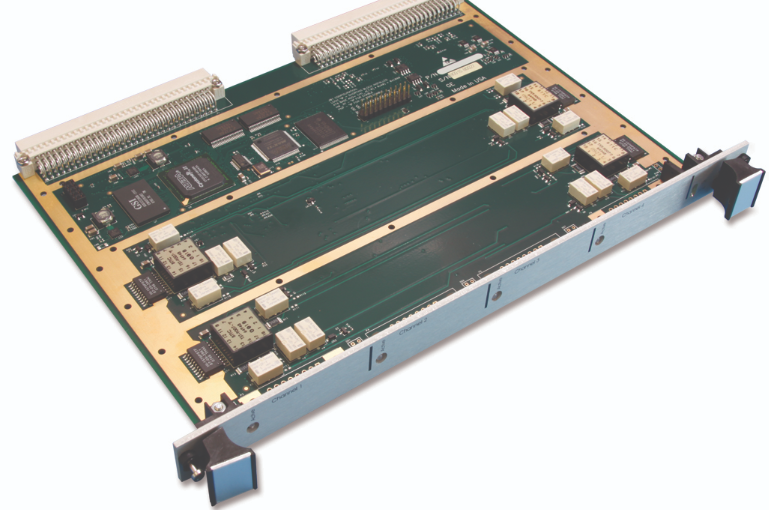
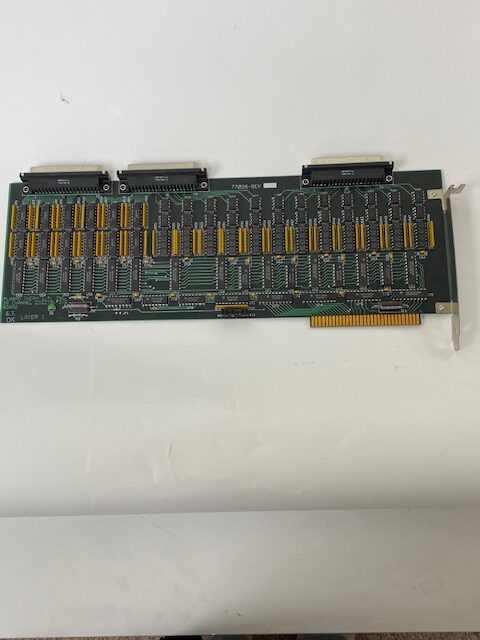
The RQVME-1553 Interface Board is a VMEbus-compatible card designed for interfacing with MIL-STD-1553 communication systems. This card is commonly used in avionics, military, and industrial applications where robust and reliable data transfer over 1553 buses is required. It provides versatile options for monitoring, simulating, and interfacing with 1553 communication protocols.
Key Features
- VMEbus Compatibility
- Designed to seamlessly integrate into VME-based systems, adhering to VMEbus standards.
- MIL-STD-1553 Protocol Support
- Provides a complete interface for Bus Controller (BC), Remote Terminal (RT), and Bus Monitor (BM) functionalities.
- Multiple Channel Support
- Offers one or more MIL-STD-1553 channels for handling multiple bus systems simultaneously.
- High Performance
- Supports high-speed data transfers with low-latency communication, ensuring efficiency in critical systems.
- Versatile Application Support
- Suitable for testing, simulation, and operational deployment in MIL-STD-1553 systems.
Specifications
| Feature | Details |
|---|---|
| Bus Compatibility | VMEbus |
| Communication Protocol | MIL-STD-1553A/B |
| Functions Supported | BC, RT, BM |
| Number of Channels | 1 or more (varies by model) |
| Data Rates | 1 Mbps (standard MIL-STD-1553 rate) |
| Processor | Embedded processor for protocol handling |
| I/O Connectors | MIL-STD-1553 standard connectors |
| Host Interface | VMEbus P1/P2 connectors |
| Software Support | Drivers for popular operating systems (Linux, Windows) |
| Operating Temperature | -40°C to 85°C (industrial-grade models) |
| Power Consumption | Typically < 15W |
Applications
- Avionics
- Used in aircraft for interfacing with onboard MIL-STD-1553 data buses.
- Defense and Military Systems
- Plays a critical role in communication for missile systems, ground stations, and military vehicles.
- Industrial Automation
- Facilitates communication in rugged and industrial-grade applications.
- Simulation and Testing
- Ideal for laboratory environments to simulate and analyze MIL-STD-1553 networks.
- Embedded Systems
- Integrated into custom VMEbus-based embedded systems for legacy support and operations.
Advantages
- Reliability
- MIL-STD-1553 is known for its robustness and fault tolerance, and the RQVME-1553 complements these attributes.
- Flexibility
- Supports multiple operational modes (BC, RT, BM) for diverse use cases.
- Wide Software Support
- Includes libraries and drivers for streamlined integration with modern systems.
- Legacy System Compatibility
- Perfect for upgrading or maintaining legacy systems reliant on VMEbus and MIL-STD-1553.
- Durable Build
- Built to withstand harsh environments, suitable for aerospace and defense applications.
Limitations
- Legacy Bus Standard
- VMEbus is less common in modern systems compared to PCIe or other interfaces.
- Complexity
- Requires specialized knowledge of MIL-STD-1553 protocols for setup and use.
Technical Summary
| Attribute | Details |
|---|---|
| Form Factor | VMEbus |
| Compliance | MIL-STD-1553A/B |
| Cooling Requirements | Passive or forced air |
| Dimensions | VME standard |
| I/O Ports | MIL-STD-1553 standard connectors |
| Weight | 3 lbs |
|---|---|
| Dimensions | 12 × 9 × 3 in |
Related products
Sale!
Circuit Board Modules
Original price was: $479.00.$375.00Current price is: $375.00.
SKU: 1241

Sale!
Circuit Board Modules
Original price was: $479.00.$375.00Current price is: $375.00.
SKU: 1240