

- +9 more
Product Description
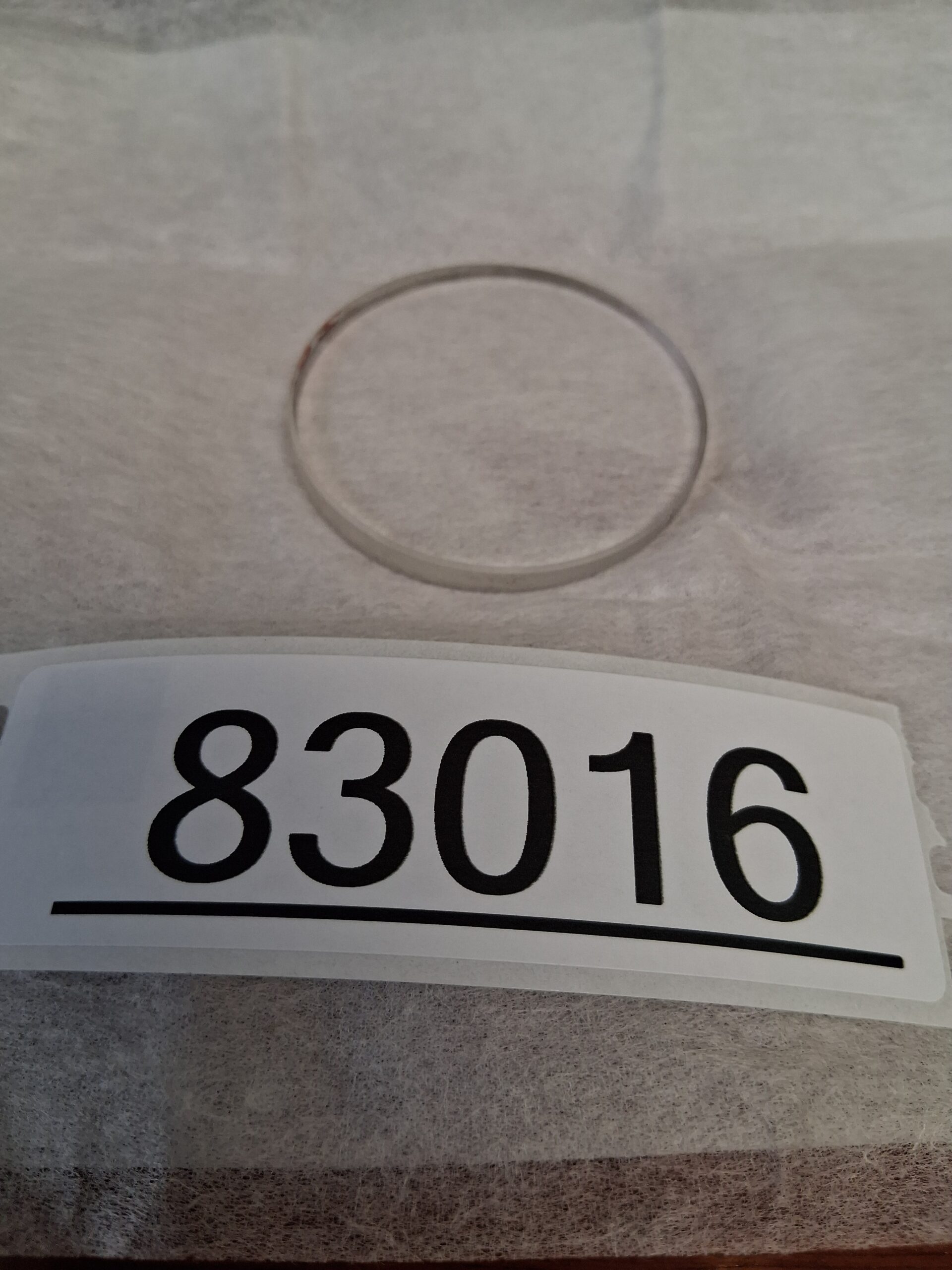
Surplus Research Lab 2″ (50.8mm) N-BK7 Optical Wedge Prism/Window, ~2.3° Wedge, Uncoated – Excellent Condition
A high-quality optical wedge prism sourced directly from a research laboratory surplus inventory. With a 2″ (50.8mm) diameter, precision-polished N-BK7 substrate, and a substantial ~2.3° wedge angle, this component delivers controlled beam deviation while eliminating etalon fringes and parasitic back-reflections—essential for clean, stable optical systems. Excellent condition, ready for immediate deployment.
🔍 Key Specifications:
📐 Dimensions & Geometry:
-
Diameter: 2.0″ (50.8 mm) – standard mounting compatibility
-
Design: Plano-plano wedge – one strictly flat surface, one plano with precision wedge
-
Wedge Angle: ~2.3° (calculated from edge thickness differential)
-
Beam Deviation: ~1.2° at 589 nm (dependent on index, Snell’s law)
-
Edge Thickness: ~3.5 mm (thin edge) to ~5.5 mm (thick edge)
-
Edge Marking: Handwritten red “26 ^” – caret arrow points to thicker edge for instant orientation
💎 Substrate & Surface:
-
Material: N-BK7 optical glass – borosilicate crown, excellent homogeneity
-
Transmission Range: 350–2000 nm – deep blue to near-IR
-
Surface Quality: High research-grade polish – λ/10 or better flatness (typical for lab optics)
-
Surface Finish: Appears flawless under inspection – no scratches, chips, or sleeks
-
Coating: Uncoated – ~4% natural reflectivity per surface, no wavelength restrictions
✅ Condition:
-
Optical Surfaces: Excellent – pristine, no visible defects
-
Edges: Clean, precision-ground, no chips
-
Origin: University/research laboratory surplus – professionally handled and stored
-
Includes: Wedge only – no mounting hardware
⚙️ Why This Optical Wedge is Exceptional:
🔬 Research-Grade Pedigree:
This is not a commercial catalog surplus item—it is a laboratory-selected optical component from an active research environment. The λ/10 surface quality and precise wedge fabrication reflect genuine research-grade specifications.
📏 Substantial 2.3° Wedge – Beyond Standard “Anti-Fringe”:
Most commercial “wedged windows” offer only 30–60 arcminutes (0.5–1.0°) of wedge—barely sufficient for etalon suppression. This ~2.3° wedge provides:
-
Complete elimination of interference fringes – no residual etalon effects
-
Significant beam deviation – useful for intentional steering, not just parasitic prevention
-
Laser cavity feedback suppression – prevents back-reflections into gain media
-
Clear separation of front/back surface reflections – simplifies alignment
🎯 Instant Orientation – Lab-Marked Thick Edge:
The handwritten “26 ^” marking with caret arrow pointing to thick edge is a professional lab practice:
-
No guesswork – thick edge identified immediately
-
Consistent setup – reproduceable deviation direction
-
Time-saving – no need to measure or calculate orientation
💎 Uncoated N-BK7 – Maximum Flexibility:
-
Broadband utility – single component works from 350 nm to 2 µm
-
No coating to damage – clean with standard solvents, no AR limitations
-
Predictable 4% reflectivity – ideal for beam sampling and power monitoring
-
Custom coating ready – apply your own AR/HR for specific wavelengths
🔬 λ/10 Surface Quality:
This is not a workshop-grade window—the λ/10 flatness specification indicates:
-
Minimal wavefront distortion – preserves beam quality
-
Interferometry-capable – suitable for reference-grade applications
-
Research-grade fabrication – not commodity production
🛠️ Applications & Uses:
💫 Controlled Beam Deviation & Steering:
-
Intentional beam offset in optical trains – no tip/tilt mount required
-
Laser beam steering for alignment and positioning
-
Beam sampler – use front-surface reflection for power monitoring
-
Optical isolator substitute – prevent feedback into laser cavities
🔬 Etalon Fringe & Back-Reflection Suppression:
-
Eliminate interference fringes in imaging and spectroscopy systems
-
Prevent parasitic etalons between parallel surfaces in multi-element optics
-
Suppress feedback into laser diodes, fiber lasers, and gas lasers
-
Clean up beam profiles – no modulation from unintentional cavities
⚙️ Risley Prism Configuration:
-
Pair with second wedge for variable beam steering (Risley prism scanner)
-
Two-axis beam control with simple rotation adjustments
-
Compact, vibration-resistant alternative to mirror gimbals
🔭 Interferometry & Metrology:
-
Beam steering in Michelson, Mach-Zehnder, and Fizeau interferometers
-
Reference beam offset for phase-shifting interferometry
-
Shearing interferometry components
🧪 Spectroscopy & Optical Testing:
-
Beam displacement in monochromator input optics
-
Calibration reference for deviation measurements
-
Educational demonstrations – Snell’s law, prism deviation, dispersion
🎓 Research & Education:
-
University teaching labs – demonstrate wedge deviation and total internal reflection limits
-
Advanced laboratory courses – build Risley beam steerers
-
Optics prototyping – rapid configuration of beam paths
| Weight | 2 lbs |
|---|---|
| Dimensions | 6 × 3 × 3 in |
Related products

Sale!

Optical Components
Original price was: $2,200.00.$1,199.99Current price is: $1,199.99.
SKU: GLS106


Sale!

Optical Components
Original price was: $1,500.00.$999.00Current price is: $999.00.
SKU: 52996