Product Description
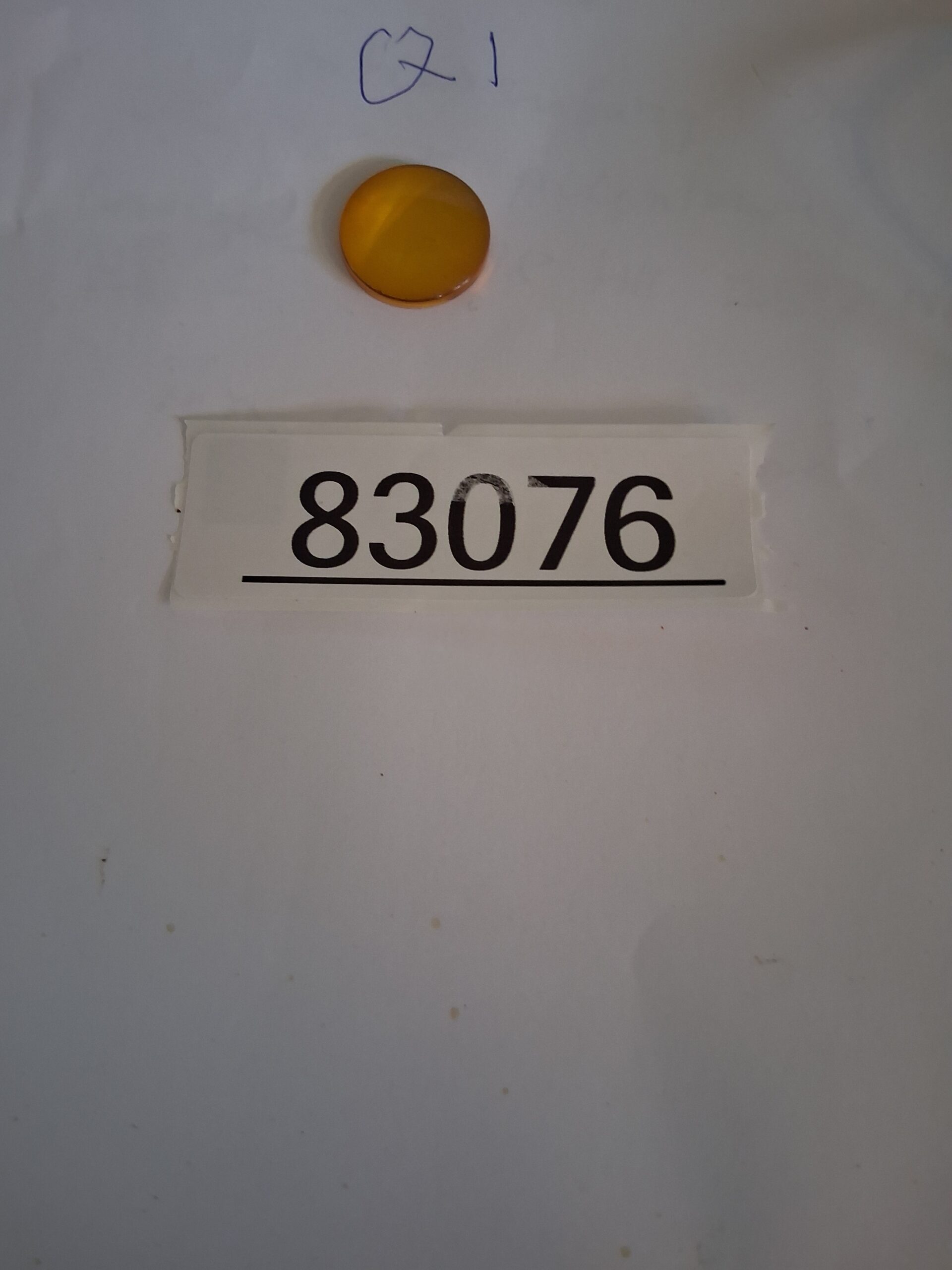
II-VI ZnSe Meniscus Focusing Lens for CO2 Lasers – 1″ Diameter, 1.5″ Focal Length – Pristine Surplus Optic
This high-quality Zinc Selenide (ZnSe) meniscus focusing lens, manufactured by II‑VI Incorporated (now part of Coherent Inc.) , is a premium optical component designed for optimal performance in CO2 laser systems operating at the 10.6 μm wavelength . Proudly made in the USA by a leading American optics innovator, this lens stands out from lower-grade imports, offering superior material purity, precision craftsmanship, and reliability that justify its premium positioning.
With a 1-inch diameter and 2.29 mm edge thickness, it features a convex-concave (meniscus) shape that minimizes spherical aberration, ensuring superior beam quality and efficiency compared to standard plano-convex lenses . The effective focal length is 1.5 inches when oriented with the convex side facing the light source, making it ideal for high-resolution applications requiring a tight focus spot.
Crafted from low-absorption, high-purity ZnSe material, this lens offers exceptional transmission (>99% with AR coatings) and thermal stability, capable of handling laser powers up to several hundred watts without degradation . It’s in pristine condition—no scratches, fingerprints, or signs of use—ensuring like-new performance straight out of the box.
Key Specifications
| Specification | Details |
|---|---|
| Manufacturer | II‑VI Incorporated (now Coherent Inc.) |
| Country of Origin | USA |
| Material | Laser-grade Zinc Selenide (ZnSe) |
| Shape | Meniscus (convex on one side, concave on the other) |
| Diameter | 1 inch (25.4 mm) |
| Edge Thickness | 2.29 mm |
| Effective Focal Length (EFL) | 1.5 inches (38.1 mm) |
| Wavelength | Optimized for 10.6 μm (CO2 lasers) |
| Coatings | Anti-reflection (AR/AR) on both sides for 10.6 μm |
| Transmission | >99% at 10.6 μm (with AR coatings) |
| Power Handling | Suitable for low to medium-power CO2 lasers (up to ~300W typical) |
| Reference Series | Similar to II‑VI’s MP-5 series of ultra-low absorbing lenses |
| Condition | Pristine – no scratches, fingerprints, or signs of use |
Why Meniscus? Superior Optical Design
Meniscus lenses are generally used as cutting lenses . They have a convex/concave surface by which the relevant aberration – the spherical aberration – is reduced . The achievable focus diameter is smaller than that of plano-convex/plano-concave lenses, particularly at short focal lengths .
For a fast lens like this 1.5″ FL (approximately f/1.5), the meniscus design is critical:
-
Minimized Spherical Aberration: All rays are brought to nearly the same focus point, resulting in a smaller, more intense spot .
-
Superior Beam Quality: Essential for high-resolution cutting, engraving, and marking applications.
-
Improved Efficiency: More energy delivered to the workpiece, reducing waste and improving processing speed.
In many applications, particularly at long focal lengths, plano-convex lenses can be used without a problem. However, the shorter the focal length or the larger the beam diameter, the greater the spherical aberration. Then meniscus lenses are preferred .
Material Advantages – Laser-Grade Zinc Selenide
Zinc selenide components for CO2 lasers are made exclusively with high quality “laser grade” material that can be used even in the kW range . When coated, these zinc selenide elements have a transmittance of T > 99.4 % at 10.6 µm .
Key properties include:
-
Low Absorption: Ultra-low absorption at 10.6 μm minimizes thermal lensing and power loss .
-
High Thermal Stability: Resists thermal deformation under high-power operation .
-
Visible Transmission: ZnSe transmits in the visible range (appears yellow-orange), enabling easy alignment with visible lasers (e.g., HeNe at 633 nm) . This is atypical of other substrates designed for this region .
-
CVD-Grown Purity: Chemical Vapor Deposition (CVD) process ensures high-purity, consistent material .
Important Handling Note: ZnSe is a crystal material and not as strong as glass substrates, so great care should be taken when handling, mounting and cleaning these lenses . Apply uniform pressure when handling/mounting. Tools, including tweezers, should not be used because the substrate easily scratches, cracks, or chips . Latex finger cots and gloves should always be worn when handling and cleaning these lenses to keep from contaminating the substrate or coating .
Applications
Laser Cutting and Engraving:
-
High-detail work on non-metals like acrylic, wood, leather, plastics, textiles, and paper
-
Delivers clean edges and fine resolutions in machines from brands like Epilog, Trotec, or Universal Laser Systems
-
The 1.5″ focal length enables a small spot size ideal for intricate designs
Material Marking and Etching:
-
Ideal for barcode marking, serialization, or decorative engraving on organic materials, ceramics, or anodized metals
Medical and Scientific Applications:
-
Used in dermatological lasers, surgical tools, or research setups for tissue ablation, spectroscopy, or infrared imaging
Industrial Processing:
-
Enhances efficiency in manufacturing lines for packaging, signage, or prototyping
-
CO2 lasers excel in cost-effective, contactless processing
DIY and Upgrades:
-
A direct replacement or upgrade for entry-level to mid-range CO2 laser engravers (40W-300W)
-
Improves cut quality and reduces material waste compared to standard plano-convex lenses
Condition
PRISTINE – UNUSED
NO SCRATCHES, FINGERPRINTS, OR SIGNS OF USE
OPTICAL SURFACES: CLEAN, COATINGS INTACT
STORED AND HANDLED WITH CARE
READY FOR IMMEDIATE INTEGRATION
⚠ CRITICAL HANDLING NOTE: ZnSe is a soft, brittle crystal material . Always wear gloves when handling . Handle only by edges. Never use tools or tweezers. Apply uniform pressure when mounting . Clean only with approved optical solvents and lint-free cloths if absolutely necessary.
| Weight | 1 lbs |
|---|---|
| Dimensions | 6 × 3 × 3 in |
Related products


Optical Accessories
Fiber Tap Data Com 10/100/1000-Tap Passive Optical Connectors


Optical Equipment